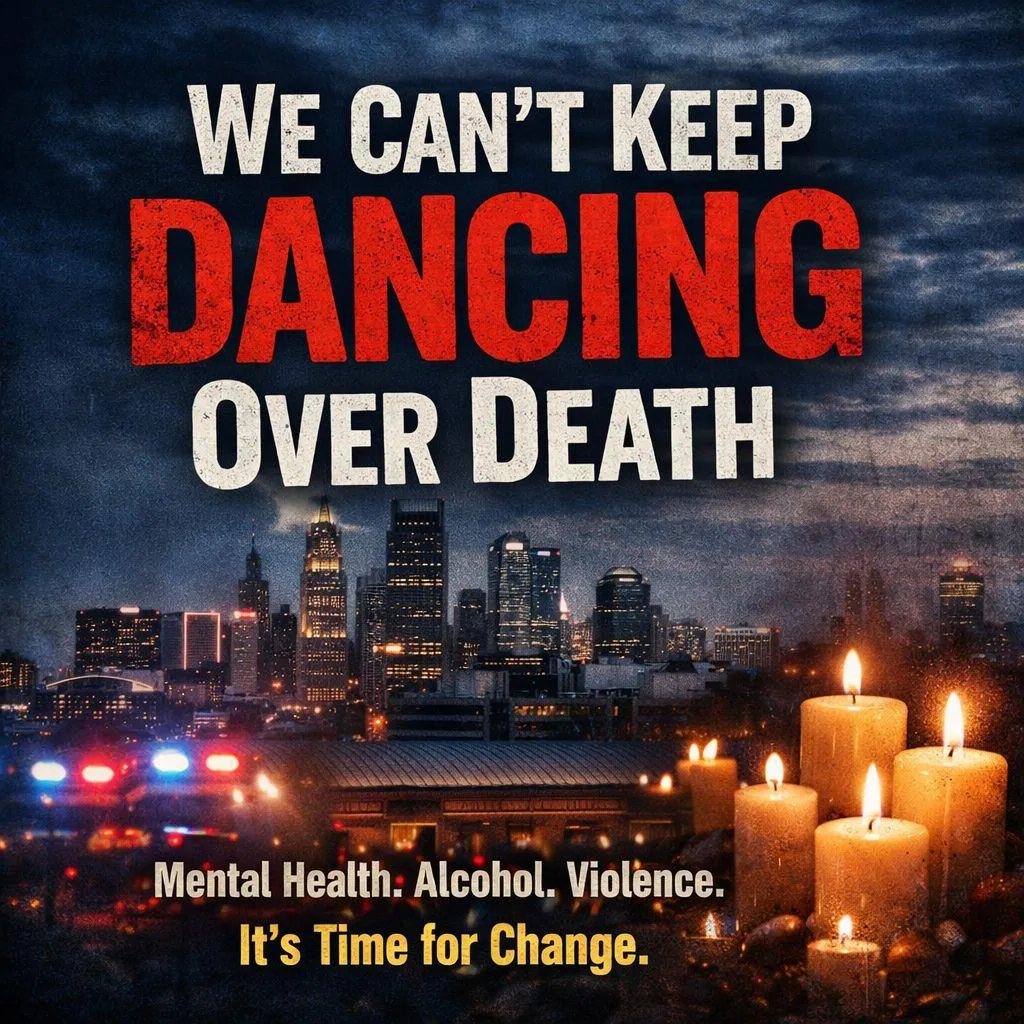
We Can’t Keep Dancing Over Death
“We Can’t Keep Dancing Over Death”
First and foremost, I want to open with love.
To the families who lost loved ones inside that club in Kansas City on Valentine’s Day — I am praying for you. Not just the two lives that were taken in that double homicide, but every person who was injured, every person who was traumatized, every mother who can’t sleep, every sibling replaying that night in their head.
I’m praying for the workers who showed up to make an honest living. I’m praying for the owners who now have to live with a tragedy attached to their business. I’m even praying for the suspect’s family — because while the actions were destructive and wrong, their loved one’s name is now being dragged publicly, and they are grieving too.
But now let’s talk.
This can’t just be another headline.
It was reported that the suspect was highly intoxicated. Drunk. Not in their right mind. And that right there is part of the bigger conversation nobody wants to have.
There’s a reason they call it wine and spirits. Because when you drown yourself in alcohol, you don’t just lose inhibition — you lose control. Alcohol impairs judgment, increases aggression, and lowers impulse control. According to the CDC, excessive alcohol use is involved in a significant percentage of violent crimes in America. Studies show alcohol plays a role in nearly 40% of violent offenses nationwide.
And let’s zoom in on our community.
Black Americans are disproportionately affected by homicide. According to national crime data, Black Americans represent roughly 13–14% of the U.S. population but account for more than half of homicide victims annually. Let that sink in. Over half.
And mental health? Nearly 1 in 5 adults in the United States experiences mental illness each year, but Black adults are far less likely to receive mental health treatment compared to white adults. Not because we don’t need it but because of stigma, lack of access, cost, mistrust, and cultural silence.
We don’t talk about depression.
We don’t talk about trauma.
We don’t talk about PTSD from growing up in survival mode.
We don’t talk about unresolved anger.
We just party through it.
We drink through it.
We smoke through it.
We numb it.
And sometimes that numbness explodes.
This isn’t just about one club.
This isn’t just about one suspect.
This is about a culture that tells us celebration equals intoxication.
This is about trauma that goes untreated.
This is about pain that keeps recycling itself.
Mass shootings across America continue to rise year after year. And while not all are the same, many share patterns: access to weapons, untreated mental health issues, substance abuse, emotional instability, and a culture that glorifies recklessness.
But here’s what makes me angry.
We come together beautifully for funerals.
We raise money.
We show up.
We post hashtags.
We cry.
We march.
But why does it take death for us to unite?
Why does it take blood on the floor for us to say, “We need change”?
We need change before the tragedy.
We need:
Accessible mental health resources in our neighborhoods.
Community-based counseling programs.
Churches, nonprofits, and barbershops talking openly about trauma.
Safe nightlife accountability and responsible alcohol practices.
Fathers mentoring sons.
Uncles stepping in.
Big brothers checking young men before pride turns into violence.
And we need alternatives.
Not every Friday night has to be in a club.
Not every celebration has to end in intoxication.
Not every heartbreak needs to be medicated with a bottle.
There are different routes for pain.
Therapy.
Faith.
Mentorship.
Fitness.
Brotherhood.
Accountability.
Community programs.
Creative outlets.
Economic opportunity.
The root issue isn’t just guns.
It’s brokenness.
It’s untreated trauma.
It’s alcohol-fueled rage.
It’s mental health silence.
It’s generational pain.
And if we don’t address the roots, we’ll keep burying branches.
To the families: we stand with you.
To the community: wake up.
Let’s not let this just be another candlelight vigil.
Let’s let it be a turning point.
We deserve to celebrate love on Valentine’s Day not mourn lives lost to rage and intoxication.
Kansas City is stronger than this.
Our community is smarter than this.
But we have to choose differently.
And that choice starts now.